Home / Case studies / Kevin Kelly Pharmacy

Ecommerce pharmacy · Carlow, Ireland
Online orders up 126% for Kevin Kelly Pharmacy
By Aidan McGrath, Senior Paid Media Consultant · Published
Between May and September 2026, Kevin Kelly Pharmacy's online orders rose 126% year on year after I rebuilt its tracking, site and product data and launched Google Ads and Meta Ads. The pharmacy had never advertised online, operates in a regulated sector where many products cannot be advertised the way a typical shop's can, and the growth did not come from campaigns alone. The website was fixed first, so that paid traffic landed on a site that was ready to convert.
- Client
- Kevin Kelly Pharmacy
- Started
- April 2026
- Catalogue
- About 1,460 products
- Services
- Google Ads, Meta Ads, tracking, website management
+126%
Online orders
May to September, year on year
+127%
Net sales
May to September, year on year
+134%
Product variations sold
May to September, year on year
Sales figures from WooCommerce Analytics, covering all online sales. Percentages only, at the client's request.
The client
Kevin Kelly Pharmacy is an Irish owned, family-run pharmacy that has served Carlow since 1989. It has four locations in the town and specialises in sports injury, orthotics and sports nutrition, alongside skincare and mother and baby ranges. The online shop carries around 1,460 products.
Kevin wanted to grow online sales across Ireland. He also wanted the website to bring more people into his stores for in-person services such as vaccinations.
Why the pharmacy's website could not support ads
The pharmacy had a long-standing reputation in Carlow, but its website did not reflect it. When I started, there were five main problems.
No advertising and no measurement
No ads had ever run. Sales were recorded in WooCommerce, but there was no Google Analytics and no conversion data reaching any ad platform.
A slow site
The homepage scored 47 out of 100 for mobile performance, and the main content took 5.9 seconds to appear on mobile.
Low credibility
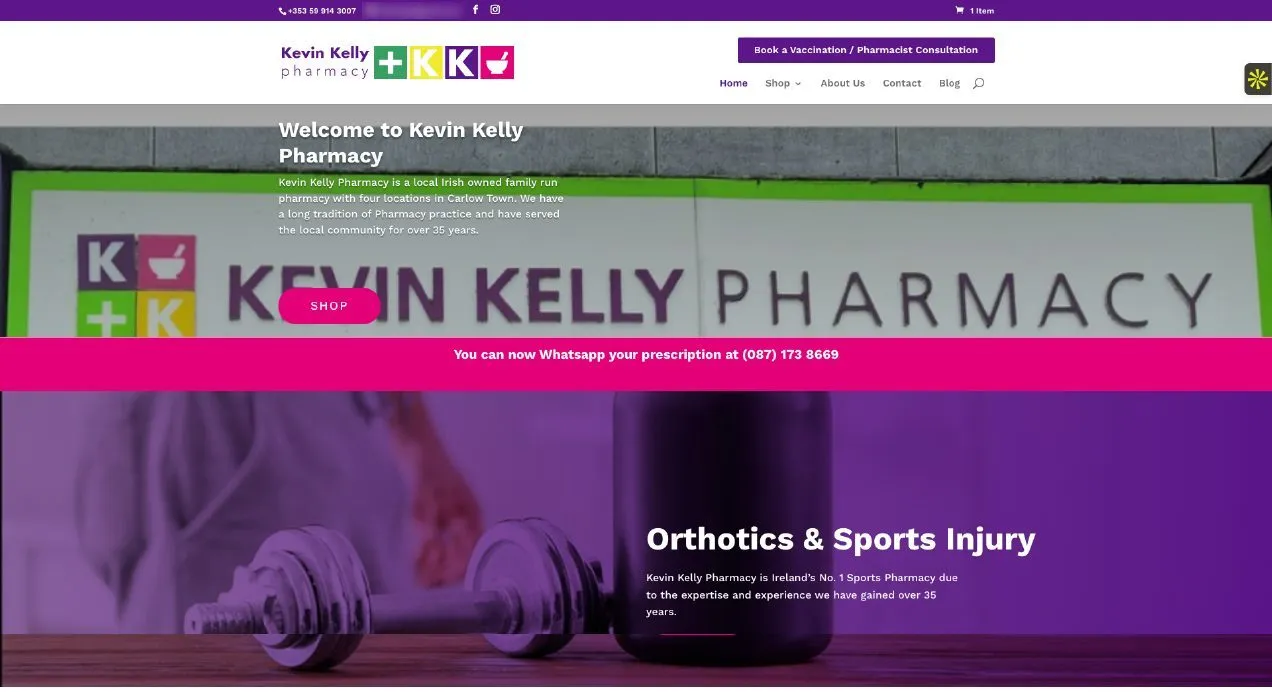
The homepage opened with a generic welcome message and listed a personal Gmail address. It said four locations in one place and three in another, and there was no delivery threshold, guarantee or other reason to buy online.
Inconsistent product data
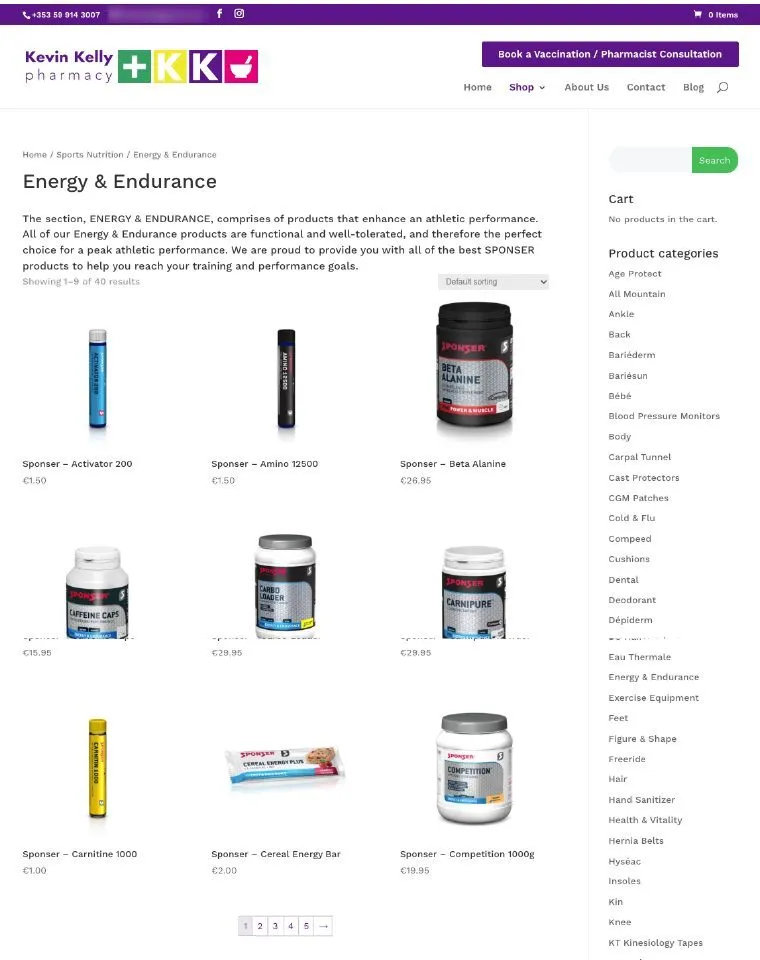
Product names followed no common format, some products had no description, and others had no image or only one. Category pages showed nine products at a time beside a sidebar of more than 70 categories.
A regulated sector
Pharmacy products are subject to strict rules on health claims and on what can be advertised, so the ads could not be built the way they would be for a typical ecommerce shop.
What I changed before and after launching ads
I fixed the foundations before spending anything on ads. Advertising sends people to the website, and a slow site with thin, inconsistent product data wastes that budget. The priority was accurate tracking, a fast site, complete and consistent product data, and clear reasons to buy, so that when paid traffic arrived it would convert.
This is what paid media management involves in practice. It goes well beyond setting up campaigns and running them. It is a complete strategy from analytics and tracking through to the website and the ads, so that every month there is reliable data to learn from and improve on.
MeasurementTracking from scratch
Google Analytics 4, Google Tag Manager and the Meta Pixel, with full ecommerce tracking.
There was no analytics on the site when I started, so there was no way to tell which channel drove a sale. I set up Google Analytics 4 through Google Tag Manager with full ecommerce events, from product views and add to cart through to purchase and revenue, and installed the Meta Pixel alongside it.
Purchase data now feeds back into Google Ads and Meta Ads as conversions, so both platforms optimise towards real sales, and every campaign decision since has been based on measured results.
PerformanceSite speed
Mobile performance score up from 47 to 91, desktop from 66 to 100.
The homepage took 5.9 seconds to show its main content on mobile, which loses people before they see a product. I added page caching with WP Rocket and compressed the site's images.
Mobile Largest Contentful Paint fell from 5.9 to 3.2 seconds, Speed Index from 4.5 to 2.3 seconds and Total Blocking Time from 1,190 ms to zero. Desktop layout shift dropped from 0.184 to 0.003.
CatalogueProduct data
Consistent titles, complete descriptions and images, and category pages built for browsing.
- Rewrote 1,341 product titles for Google Shopping so that they follow one consistent format
- Wrote product descriptions where they were missing and added images where products had none
- Wrote brand pages for La Roche-Posay, Uriage, Vichy and SVR
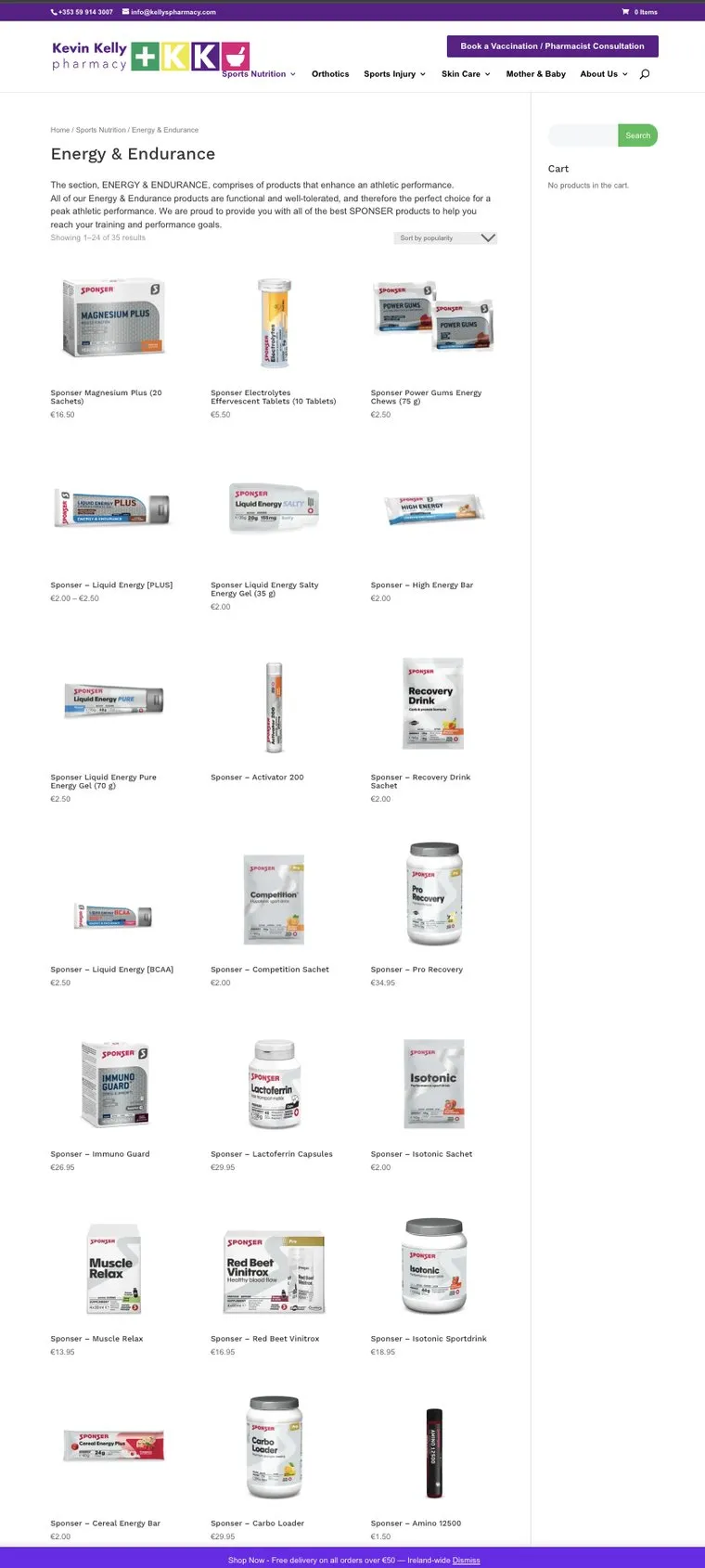
- Replaced the 70-plus category sidebar with structured menus, raised category pages from 9 to 24 products and sorted them by popularity so the best sellers appear first
- Fixed site search so it returns a product grid with prices instead of blog-style results
CredibilityTrust and credibility
One clear message on the homepage, backed by proof points and a guarantee.
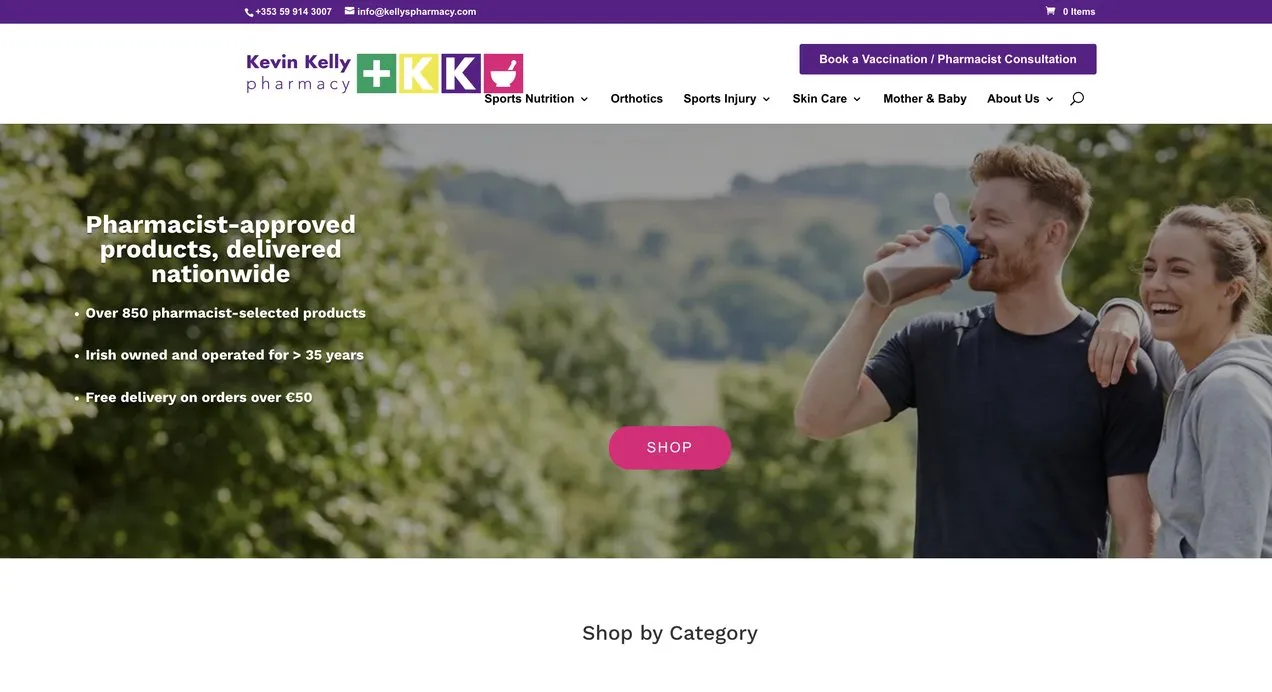
I rewrote the homepage around one clear message, pharmacist-approved products delivered nationwide, backed by proof points: about 1,460 pharmacist-selected products, Irish owned and operated for over 35 years, and free delivery on orders over €50.
I added trust signals across the site, including a 30-day money-back guarantee, replaced the personal Gmail address with a business email and corrected the information that conflicted from page to page.
AdvertisingAdvertising in a regulated sector
Google Ads and Meta Ads built from scratch, within the rules on health claims and medicines advertising.
Pharmacy advertising is more restricted than most ecommerce. Many products are disapproved in Google Merchant Center because their titles or descriptions contain health claims or stated benefits, and a disapproved product cannot appear in Shopping ads. I reviewed the affected listings, rewrote them to comply with Google's healthcare policies and submitted them for re-review, so they were approved and started receiving impressions.
The same discipline applied to the ad copy. Every search ad was written within Google's policies on healthcare and medicines, so the campaigns could run without disapprovals holding them back.
Site changes, before and after
The homepage and a typical category page in March 2026, and the same pages today.
Homepage
Category page
Results after five months
Between May and September 2026, every sales measure in WooCommerce more than doubled compared with the same months in 2025.
+126%
Online orders
The number of orders placed through the website more than doubled compared with the same five months in 2025.
+127%
Net sales
The value of products sold, after refunds and discounts and before shipping and tax, grew in step with orders.
+114%
Total sales
Including shipping and tax. The gap below net sales reflects free delivery on orders over €50, which reduced shipping income as orders grew.
+134%
Product variations sold
Grew faster than orders, so the average basket now holds more items than it did a year ago.
Source: WooCommerce Analytics, all online sales, May to September 2026 compared with May to September 2025. Percentages only, at the client's request.
The order of the work mattered. The website was fixed first, so the first euro of ad spend went to a site that could convert, and the tracking was in place from day one, so every campaign decision since has been based on measured results rather than guesswork.
Since working with Aidan, our online sales have more than doubled year on year. He makes everything easy to understand and is a pleasure to work with.
Questions about advertising a pharmacy online
Can a pharmacy advertise on Google Shopping in Ireland?
Yes, for most over-the-counter and retail products such as sports nutrition, skincare, orthotics and mother and baby ranges. Prescription medicines cannot be advertised, and any listing whose title or description makes a health claim is likely to be disapproved until it is rewritten to meet Google's healthcare policies.
Why do pharmacy products get disapproved in Google Merchant Center?
Usually because the product title or description states a health benefit or makes a claim that Google's healthcare and medicines policy does not allow. A disapproved product cannot appear in Shopping ads. The fix is to rewrite the listing within the policy and request a re-review, which is what I did for Kevin Kelly Pharmacy.
Why fix the website before running ads?
Advertising sends people to the website, and a slow site with inconsistent product data converts a smaller share of them. Fixing tracking, speed, product data and trust signals first means the first euro of ad spend goes to a site that can convert, and every result after that can be measured.
How long did it take to see results?
I started in April 2026. The tracking, site speed and product data work came first, and the ads were launched on that foundation. The figures on this page compare May to September 2026 with the same months in 2025.
Are the figures real?
Yes. Sales figures come from WooCommerce Analytics and cover all online sales. Site speed figures come from Google PageSpeed Insights. Percentages are shown rather than euro amounts at the client's request.